Quick answer: They tend to be worth it if you spend long stretches sitting still or standing up - flights, shifts, long drives, late pregnancy. They tend not to be if you are mostly moving about normally. Fit decides it more than price does.
We sell these, so treat this as an interested party trying to be straight with you rather than a neutral verdict.
The short version
The people who keep wearing them have something in common: their day involves a long stretch of not moving much, either sitting or standing. Flights, coach journeys, twelve-hour shifts, long drives, desk days that run late, the last months of pregnancy.
The people who try a pair and leave them in a drawer usually either bought the wrong size, or did not have a problem the socks were addressing in the first place.
Who tends to find them worth it
Travellers. The clearest case, because a long flight is hours of sitting with nowhere to go - the travel guide covers it.
People on their feet all day. Nurses, teachers, chefs, hospitality, retail, warehouse work - the work guide covers those days.
Runners and gym-goers, mostly for how legs feel afterwards - the sport guide covers it.
Later pregnancy, when standing gets harder - the pregnancy guide covers that.
Who probably does not need them
If you are up and about all day, moving normally, and your legs feel fine by evening, there is nothing here you are missing. Buying a pair because they are trending is how they end up unworn.
The same goes for buying a firmer specification than you need on the assumption that more is better. It is not - the mmHg guide explains why.
The two things that decide it
1. Fit. A well-fitting cheap pair beats an expensive pair in the wrong calf width every single time. Almost everybody who tells me these are uncomfortable bought a size too small at the top - the sizing and fit guide takes two minutes and decides the whole thing.
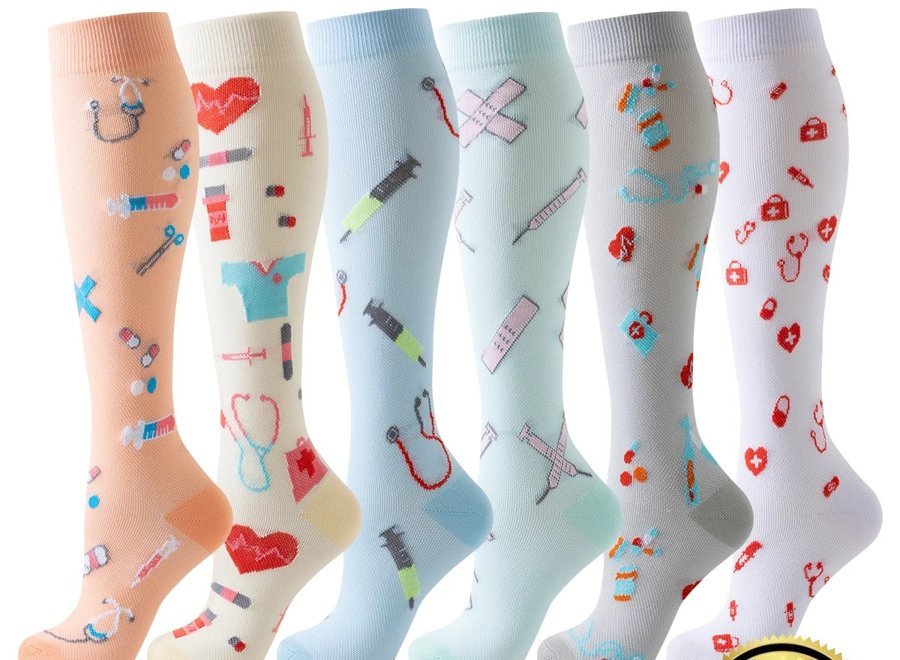
2. Whether you actually wear them. Sounds obvious. In practice, socks that are a struggle to put on, or that you find ugly, do not get worn - which makes them expensive whatever they cost. Buy a style you can manage and a design you do not mind - the everyday range covers looking normal.
What they cost
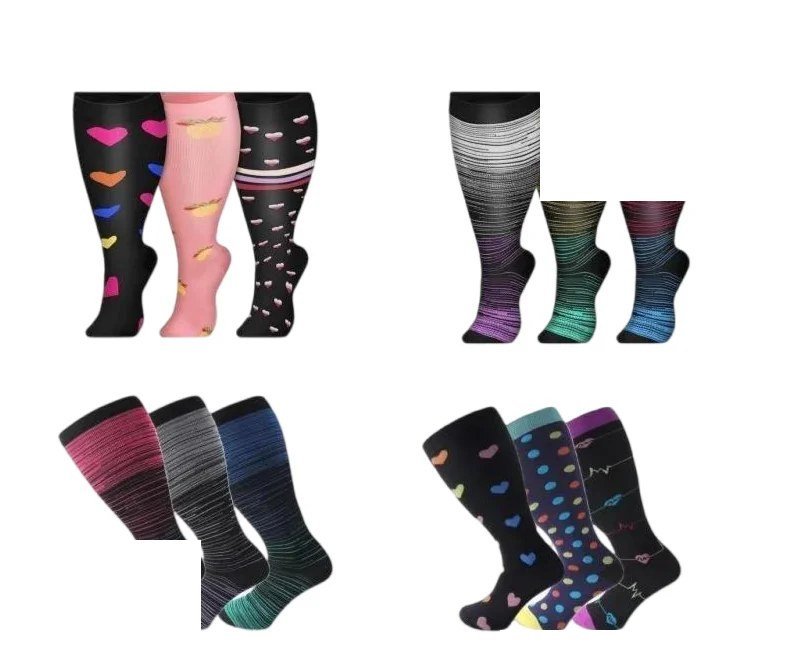
Ours start at £9.99 a pair, and multipacks bring that down considerably per pair. Set against that, a pair worn twice a week for a year is not an expensive thing, and a pair that never leaves the drawer is expensive at any price - the multipacks covers what is worth paying for, and the multipacks are the cheapest way to test whether they suit you.
How long a pair lasts
Worth factoring in. The stretch is what does the work and it degrades with washing, heat and time. Treated well - cool wash, no tumble dryer, worn in rotation with other pairs - a pair lasts a good while. Tumble-dried once or twice, considerably less - the care and FAQs guide covers the signs, and the care guide covers getting more out of them.
The most common way people waste the money
Buying six pairs at once before knowing whether they suit you.
It is understandable - multipacks are better value per pair - but if the size is wrong you have six wrong socks rather than one. Buy a single pair, wear it for a week, then buy the multipack in the size you now know works.
The second most common way is buying for someone else without their calf measurement. It is a difficult gift to get right for exactly that reason - the complete buyer's guide covers how to do it anyway.
How long before you know
A couple of proper wears, meaning two of the days you bought them for rather than two quiet afternoons.
If they are the right fit you will notice they are comfortable and then stop noticing them. If the top band is marking you, if you are counting down to taking them off, or if they are sliding down, that is a fit problem and worth exchanging rather than concluding they are not for you.
What we will not claim
We sell comfort and support garments. We do not make health claims about them and we would be wary of any shop that does. This is comfort advice, not medical advice - if something about your legs is on your mind, that is a conversation for a pharmacist or GP rather than a sock retailer.
The honest recommendation
If you fly, work a long shift on your feet, run, or are well into a pregnancy, buy one well-fitting pair and see. If it suits you, you will know within a couple of wears, and if it does not, we pay the return postage and you have 30 days - the returns page has the detail. That is a fairly low-risk way to find out, and it beats reading another list of benefits - the buyer's guide covers choosing the pair.
Browse the bestsellers or the full range.
The short version
- The people who keep wearing them spend long stretches sitting still or standing up.
- If you move about normally all day and feel fine, you are not missing anything.
- Fit decides it more than price - a cheap pair that fits beats an expensive one that does not.
- A pair you find a struggle or ugly does not get worn, which makes it expensive at any price.
- 30 days and return postage paid makes trying one pair a low-risk way to find out.
Frequently asked questions
Who actually benefits from compression socks?
People whose day involves a long stretch of not moving much - flights, coach journeys, long shifts standing, long drives, late pregnancy. The common thread is sitting still or standing still for hours.
Who should not bother?
Anyone up and about all day, moving normally, whose legs feel fine by evening. Buying a pair because they are trending is exactly how they end up unworn in a drawer.
Is an expensive pair better?
Not necessarily. A well-fitting cheap pair beats an expensive pair in the wrong calf width every time. Almost everyone who finds them uncomfortable bought a size too small around the top.
How long does a pair last?
It depends almost entirely on washing. The stretch does the work and it degrades with heat, so a pair washed cool and dried flat lasts well, while one that has been tumble-dried a couple of times will not.
How can I try them without wasting money?
Buy one well-fitting pair rather than a drawer full. You will know within a couple of wears, and there are 30 days to send them back with the return postage paid if they are not right.